Showing posts with label White Star Line. Show all posts

Wednesday, April 4, 2012

Unsung Heroes: Titanic's Engineers

The other night I watched a program on PBS called Saving the Titanic, which focused on the engineers' valiant efforts to keep the lights on and ship afloat for as long as possible. I was particularly interested because little tends to be mentioned of these unsung heroes. Many of them were entombed in Titanic's bowels as she went down.

The above photograph, taken aboard Olympic, shows 14 engineering officers (numbered) who transferred to Titanic and were subsequently lost. They, along with Chief Engineer Joseph Bell (pictured below at right), along with hundreds of firemen and trimmers stayed at their posts until the end.

Stokers kept up the necessary steam in order to provide the electrical plant with power; the lights subsequently stayed on until minutes before Titanic sank. These men did everything in their power to keep the ship afloat, despite the fatal damage to her hull. All the pumps aboard the White Star liner couldn't save her.

Needless to say, there were tremendous casualties in the Engineering Department. All of Titanic's engineers perished in the disaster, including most of her firemen and trimmers. In fact, of the 316 men listed on the roster, only 72 survived the sinking. Memorials to these men were erected in Southampton and Liverpool.

All of their names are listed below, with the survivors' in bold and italicized.

Abrams, Mr. William
Adams, Mr. R.
Allen, Mr. Henry
Allen, Mr. Ernest Frederick
Allsop, Mr. Alfred Samuel
Avery, Mr. James Frank
Bailey, Mr. George W.
Baines, Mr. Richard
Bannon, Mr. John
Barlow, Mr. Charles
Barnes, Mr. Charles
Barnes, Mr. Frederick
Barrett, Mr. Frederick
Barrett, Mr. Frederick William
Beattie, Mr. Joseph
Beauchamp, Mr. George William
Bell, Mr. Joseph
Bendell, Mr. F.
Bennett, Mr. George Alfred
Benville, Mr. E.
Bessant, Mr. William Edward
Bevis, Mr. Joseph Henry
Biddlecombe, Mr. Charles
Biggs, Mr. Edward Charles
Billow, Mr. J.
Binstead, Mr. Walter
Black, Mr. Alexander
Black, Mr. D.
Blackman, Mr. H.
Blake, Mr. Percival Albert
Blake, Mr. Seaton
Blake, Mr. Thomas
Blaney, Mr. James
Blann, Mr. Eustace Horatius
Bott, Mr. W.
Bradley, Mr. Patrick Joseph
Brewer, Mr. Henry "Harry"
Briant, Mr. Albert
Brooks, Mr. J.
Brown, Mr. John
Brown, Mr. Joseph James
Burroughs, Mr. Arthur
Burton, Mr. Edward John
Butt, Mr. William John
Calderwood, Mr. Hugh
Canner, Mr. J.
Carr, Mr. Richard Stephen
Carter, Mr. James
Casey, Mr. T.
Castleman, Mr. Edward
Cavell, Mr. George Henry
Cherrett, Mr. William Victor
Chisnall, Mr. George Alexander
Chorley, Mr. John
Clark, Mr. William
Coe, Mr. Harry
Coleman, Mr. John
Collins, Mr. Samuel
Combes, Mr. George
Cooper, Mr. Harry
Cooper, Mr. James
Copperthwaite, Mr. B.
Corcoran, Mr. Dennis
Cotton, Mr. A.
Couch, Mr. Joseph Henry
Couper, Mr. Robert
Coy, Mr. Francis Ernest George
Crabb, Mr. H.
Creese, Mr. Henry Philip
Crimmins, Mr. James
Cross, Mr. W.
Cunningham, Mr. B.
Curtis, Mr. Arthur
Davies, Mr. Thomas
Dawson, Mr. Jonathan[
Diaper, Mr. J.
Dickson, Mr. W.
Dilley, Mr. John
Dillon, Mr. Thomas Patrick
Dodd, Mr. Edward Charles
Dodds, Mr. Henry Watson
Doel, Mr. Frederick
Dore, Mr. A.
Doyle, Mr. Laurence
Duffy, Mr. William Luke
Dyer, Mr. Henry Ryland
Dymond, Mr. Frank
Eagle, Mr. A.J.
Eastman, Mr. Charles
Elliott, Mr. Everett E.
Ervine, Mr. Albert G.
Evans, Mr. Williams
Farquharson, Mr. William E.
Fay, Mr. Thomas
Ferray, Mr. Anton
Ferris, Mr. William
Fitzpatrick, Mr. Charles W.N.
Flarty, Mr. Edward
Ford. Mr. H.
Ford, Mr. Thomas
Foster, Mr. A.
Fraser, Mr. James
Fraser, Mr. James
Fredricks, Mr. W.
Fryer, Mr. Albert E.
Geer, Mr. Alfred E.
Godley, Mr. George
Godwin, Mr. Frederick W.
Golder, Mr. Martin W.
Gordon, Mr. J.
Goree, Mr. Frank
Gosling, Mr. Bertram J.
Gosling, Mr. S.
Graham, Mr. Thomas G.
Gregory, Mr. David
Grodidge, Mr. Ernest E.
Gumery, Mr. George
Hagan, Mr. John
Hall, Mr. Joseph
Hallett, Mr. George
Hands, Mr. B.
Hannam, Mr. George
Harris, Mr. Edward
Harris, Mr. Frederick
Harrison, Mr. Norman
Harvey, Mr. Herbert G.
Haslin, Mr. James
Head, Mr. Arthur
Hebb, Mr. A.
Hendrickson, Mr. Charles G.
Hesketh, Mr. James (aka John) H.
Hill, Mr. J.
Hinton, Mr. William S.
Hosking, Mr. George Fox
Hunt, Mr. Albert
Hunt, Mr. T.
Hurst, Mr. Charles
Hurst, Mr. Walter
Ingram, Mr. Charles
Instance, T.
Jacobson, Mr. John
Jago, Mr. J.
James, Mr. Thomas
Jarvis, Mr. William
Joas, Mr. N.
Judd, Mr. Charles E.
Jukes, Mr. James
Jupe, Mr. Herbert
Kaspar, Mr. Franz V.
Kearle, Mr. Charles H.
Kearl, Mr. G.
Keegan, Mr. James
Kelly, Mr. James
Kelly, Mr. William
Kemish, Mr. George
Kemp, Mr. Thomas H.
Kenchenten, Mr. Frederick
Kerr, Mr. Thomas
Kinsella, Mr. Leonard
Kirkham, Mr. J.
Knowles, Mr. Thomas
Lahy, Mr. Thomas E.
Lee. Mr. H.
Light, Mr. Charles
Light, Mr. W.
Lindsay, Mr. William C.
Loyd, Mr. W.
Long, Mr. Frank
Long, Mr. W.
Mackie, Mr. William D.
Major, Mr. William
Marrett, Mr. G.
Marsh, Mr. Frederick C.
Maskell, Mr. L.A.
Mason, Mr. Frank A.R.
Mason, Mr. James
May Jr., Mr. Arthur
May Sr., Mr. Arthur W.
Mayo, Mr. William P.
Mayzes, Mr. Thomas
McAndrew, Mr. Thomas
McAndrews, Mr. William
McCastlen, Mr. William
McCubbin, Mr. L.
McGann, Mr. James
McGarvey, Mr. Edward
McGaw, Mr. Errol
McGregor, Mr. J.
McInerney, Mr. Thomas
McInytre, Mr. William
McQuillan, Mr. William
McRae, Mr. William A.
McReynolds, Mr. William
Middleton, Mr. Alfred P.
Milford, Mr. George
Millar, Mr. Robert
Millar, Mr. Thomas
Mintram, Mr. William
Mitchell, Mr. Lawrence
Moore, Mr. John J.
Moore, Mr. R.
Moores, Mr. Robert H.
Morgan, Mr. Arthur H.
Morgan, Mr. Thomas A.
Morrell, Mr. R.
Morris, Mr. A.
Morris, Mr. W.
Moyes, Mr. William Y.
Murdock, Mr. William
Nettleton, Mr. George
Newman, Mr. Charles T.
Noon, Mr. John
Norris, Mr. James
Noss, Mr. Bertram A.
Noss, Mr. Henry
Nutbean, Mr. William
O'Connor, Mr. John
Olive, Mr. Charles
Oliver, Mr. H.
Othen, Mr. Charles
Paice, Mr. Richard C.
Painter, Mr. Charles
Painter, Mr. Frank
Pallas, Mr. T.
Parsons, Mr. Frank A.
Pearce, Mr. John
Pelham, Mr. George
Perry, Mr. Edgar L.
Perry, Mr. Henry
Phillips, Mr. G.
Pitfield, Mr. William J.
Podesta, Mr. John
Pond, Mr. George
Prangnell, Mr. George
Preston, Mr. Thomas C.
Priest, Mr. Arthur J.
Proudfoot, Mr. R.
Pugh, Mr. Percy
Pusey, Mr. Robert W.
Ranger, Mr. Thomas G.
Reed, Mr. Robert
Reeves, Mr. Robert
Rice, Mr. Charles
Richards, Mr. Joseph J.
Rickman, Mr. G.
Roberts, Mr. George
Rous, Mr. Arthur J.
Rudd, Mr. Henry
Rutter, Mr. Sidney
Sangster, Mr. Charles
Saunders, Mr. Thomas
Saunders, Mr. W.
Saunders, Mr. W.
Scott, Mr. Archibald
Scott, Mr. Frederick
Self, Mr. Alfred H.
Self, Mr. Edward
Senior, Mr. Henry
Shea, Mr. Thomas
Sheath, Mr. Frederick
Shepherd, Mr. Johnathan
Shiers, Mr. Alfred
Shillaber, Mr. Charles
Skeats, Mr. W.
Sloan, Mr. Peter
Small, Mr. William
Smith, Mr. Ernest G.
Smith, Mr. James M.
Smither, Mr. Harry J.
Snellgrove, Mr. G
Snooks, Mr. W
Snow, Mr. Eustace P.
Sparkman, Mr. Henry
Stafford, Mr. M.
Stanbrook, Mr. Augustus
Steel, Mr. Robert E.
Stocker, Mr. Henry
Street, Mr. Henry A.
Stubbs, Mr. James H.
Sullivan Mr. S.
Taylor, Mr. James
Taylor, Mr. John
Taylor, Mr. T.
Taylor, Mr. William H.
Thomas, Mr. James
Thompson, Mr. John W.
Threlfall, Mr. Thomas
Thresher, Mr. George
Tizard, Mr. Arthur
Tozer, Mr. James
Triggs, Mr. Robert
Turley, Mr. Richard
van der brugge, Mr. Wessel A.
Veal, Mr. Arthur
Vear, Mr. Henry
Vear, Mr. W.
Ward, Mr. Arthur
Ward, Mr. Joseph
Wardner, Mr. Frederick Albert
Wateridge, Mr. Edward L.
Watson, Mr. W.
Webb, Mr. S
Webber, Mr. Francis A.
White, Mr. Alfred
White, Mr. Frank L.
White, Mr. William G.
Williams, Mr. Samuel S.
Wilson, Mr. Bertie
Wilton, Mr. William
Witcher, Mr. Alfred
Witt, Mr. F.
Witt, Mr. Henry D.
Woodford, Mr. Frederick
Woods, Mr. H.
Wyeth, Mr. James
Young, Mr. Francis J


Lest we forget.

Tuesday, December 27, 2011

Snapshot: Captain Smith on the Olympic

Here's an interesting shot of Captain E.J. Smith looking out of Olympic's starboard docking wing. He would of course go on to command the ship's younger - and more infamous - sister Titanic.

E.J. Smith was regarded as one of the world's most experienced and confident seafarers, so it seemed a natural choice to place him in command of the new Olympic-class liners.

Monday, November 28, 2011

"...the last of the Line."

Continuing on my recent string of Nomadic posts, this documentary clip shows the ship as she was in Paris while serving as a restaurant.

Snapshot: Olympic & Nomadic

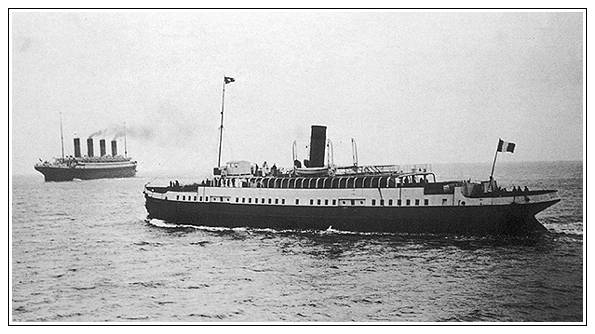
The tender Nomadic services the RMS Olympic, the last remaining ship of the White Star Line's grand trio that included Titanic and Britannic.

Of all these great ships, however, only the small 1,270 GRT Nomadic remains. She is currently undergoing renovations in Belfast, Northern Ireland and slated to be opened as a museum ship in the near future.

Snapshot: Nomadic Returns Home

Nomadic - the last remaining White Star Line ship afloat - returned home to Belfast, Northern Ireland in July 2006 after serving as a restaurant in Paris for a number of years. Launched in 1911 and ported in Cherbourg, France, she was a tender for the great Olympic and ill-fated Titanic.

After the merger with Cunard in 1934, however, Nomadic went on to service the Queen Mary and Queen Elizabeth until their respective retirements.

Saturday, October 22, 2011

Snapshot: Pulling a Body from the Water

This photo shows a boat from the Mackay-Bennett retrieving the body of a Titanic passenger following the disaster. This gruesome task went on for many days until - loaded with nearly 200 victims - the ship sailed for Halifax, Nova Scotia.

Many of these bodies were eventually buried in local cemeteries.

Tuesday, September 27, 2011

Snapshot: Olympic & Mauretania

This photo was taken in 1935 and shows two former rivals at anchor - the White Star Line's Olympic and Cunard's Mauretania - shortly before going to the breakers that same year. Following the creation of the Cunard White Star Line in 1934, both aged ships were retired to make way for such new liners as the unfinished Queen Mary and planned Queen Elizabeth.

Mauretania went to Rosyth and Olypmic to Jarrow. The demolition of these two ships provided plenty of employment opportunities for these poverty-stricken areas.

Sunday, May 22, 2011

The Olympic "Mutiny"

The RMS Olympic was ordered to be outfitted with additional lifeboats after her sister Titanic sank on April 15, 1912. The White Star Line's chairman, J. Bruce Ismay, gave specific instructions that the ship was not to sail again until accommodations were made for all persons aboard.

The Olympic first received 16 lifeboats...then 40. Ten of them came from the HMS Soudan and looked to be in rather poor shape and downright unseaworthy - especially the 10 taken off the warship. The appearance of these lifeboats (which were scruffy to say the best) alarmed several members of the Olympic's crew. A total of 276 firemen, trimmers and greasers subsequently refused to sail aboard the ship and were arrested for mutiny.

The Olypmic "mutineers" stood trial at Portsmouth Magistrates' Court. All were found guilty after a three day hearing but were not punished for their actions. The court found found that the men did have a justifiable cause for refusing to sail aboard the ship: they simply did not feel safe. So they were set free afterwards. They rejoined the ship's company after several of the lifeboats had successfully been tested.

The Olympic was ready to resume her sailings, and arrived in New York on May 22, 1912.


References: Robin Gardiner, The History of the White Star Line (Surrey: Ian Allan Publishing, 2001), 152.

Wednesday, February 2, 2011

Honorary Commodore of the Queen Mary

On February 1, 2011 Commodore Ronald W. Warwick of the Cunard Line was made the Honorary Commodore of the Queen Mary in Long Beach, California. Everette Hoard did the honors on behalf of the ship's management in a small ceremony in the Sir Winston's restaurant. He made the presentation with a touching speech that paid tribute to both the Commodore and Mrs. Warwick, whom he referred to as "the perfect First Mate." My friend then presented him with the Red Ensign that was flown in his honor aboard the ship as well as a Cunard house flag. I personally had the honor and privilege of presenting the Commodore the White Star Line's burgee. These were the flags that Commodore Warwick would have flown back in the Queen Mary's service days.

Upon accepting, Commodore Warwick told us all a story of how he found a White Star flag among his father's belongings (Commodore William E. Warwick...who also commanded the Queen Mary). He eventually took it down to the wreck of the Titanic in a submersible, and upon returning to the surface it was hoisted high on the mast. It was a poignant moment, for the Commodore went on to say how the disaster helped shipping and tightened safety standards that ultimately allowed him to transport thousands of passengers safely across the seas. For this, Commodore Warwick has become endeared to those who sailed with him.

Wednesday, January 26, 2011

The Majestic in the News

Here's a collection of three rather interesting newsreels regarding the RMS Majestic. Full credit for this compilation goes to sanderrodijk on YouTube.

Saturday, November 27, 2010

Rivalries

The great rivalry between the White Star Line and Cunard is legendary among maritime enthusiasts. Each company was famous for trying to outdo the other by building bigger, faster, and more luxurious ships than the world had ever seen before (i.e., Cunard's Mauretania and Lusitania versus White Star's Olympic, Titanic, and Britannic). It should be no surprise to learn that this rivalry extended all the way down to those who actually worked aboard these liners. This was undoubtedly an underlying cause to an event that future-Commodore Harry Grattidge described while serving as Fourth Officer aboard the RMS Carpathia. But the main reason seems to have concerned a far deeper sense of rivalry:
At 6:30 P.M., a bugler sounded the dress call, which gave us just time to take our seats in the dining saloon as another bugle sounded at seven. At Genoa, where we lay alongside the White Star liner Canopic, the dinner bugle had provoked a long-standing feud. At the appointed hour the bugler from each ship would march solemnly on deck. To hail each other was beneath their dignity, nor did they even glance at each other, for, while our bugler had belonged to the Household Cavalry, the Canopic’s bugler had served with the Irish Guards. (Only a Guardsmen could appreciate the deep significance of this.)

Instead they let the music signify their rivalry and the harbor rang with the shrill notes of “The Roast Beef of Old England,” each man contesting for the extra note until one felt that their lungs must burst under the strain. They were implacable, they would not give up, and more often than not the contest ended in a dead heat.
As stated, sometimes this rivalry extended far beyond what company the crew individual member worked for. It nevertheless contributed to the somewhat tense relations between the White Star Line and Cunard.


References: Captain Harry Grattidge, Captain of the Queens: The Autobiography of Captain Harry Grattidge, Former Commodore of the Cunard Line as told to Richard Collier (New York: E.P. Dutton & Co., Inc., 1956), 65-66.